Tuesday, October 11, 2005

Can a kid make the peace sign while holding water guns?

A seemingly innocent plaything from yesteryear -- like, say, your Popeye water pistol -- may be viewed in a different context in this day and age -- largely because of the changes that mass media have brought to our lifestyle and, consequently, our value standards. Now there are such things as "peace education" and "media literacy." Now we hear of "gaming addiction" and "cybergossip." "Instant messaging" and "blogging" provide yet other challenges to parents to keep up with technological advancements that are becoming a normal part of the culture that their kids are growing up with. Surrounded by these, any kid has access to information and images that may make him more aware of things like conflict, war, prejudice, and a host of other things that, if he's not guided well, may make him forget (or totally unaware of) the concept of peace and the need to work at it so that it reigns -- within oneself, in the family, on the societal level and between nations.

So how do we teach peace to a kid? Believe it or not, the toys he plays with has much to do with it. Here's some food for thought:

"Teaching Peace in Fearful Times"
A statement by the Alliance for Childhood

(an excerpt)

“It is easy to teach children about war,” says Joan Almon, U.S. coordinator of the Alliance for Childhood. “It is much more challenging to teach them how to create peace. In war, we draw lines and barricade ourselves against the enemy. Educating for peace means building bridges between people across every divide, including ethnic, racial, religious, and national lines.”

After the September 11 terrorist attacks, many new toys and games that glorify violence were marketed to children as young as age three. These include realistic toy weapons and battlefield gear.

These kinds of toys “focus children's play on violent themes, undermine lessons adults teach, and bring in scary real-world themes young children cannot fully understand,” notes the Toy Action Guide published by TRUCE, a national organization of educators concerned with how toys and entertainment affect children’s play and behavior (http://www.truceteachers.org/).

“Such toys may fulfill a need for adults to feel patriotic or support U.S. troops,” says Diane Levin, professor of education at Wheelock College and author of Teaching Young Children in Violent Times. “But they often channel children into narrowly scripted play, and convey a message that violent play is okay and exciting. Children need more open-ended play materials that enable them to be creative and imaginative and to work out their own needs.”

Read more at Alliance for Childhood

Sunday, October 09, 2005

Silent solidarity


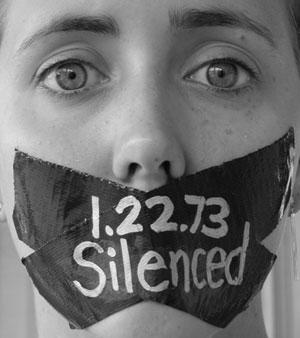
Protest against abortion will silence students at hundreds of campuses on October 25


FREDERICKSBURG, VA, September 28, 2005 (LifeSiteNews.com) - Stand True Ministries is gearing up for the second annual Students' Day of Silent Solidarity (http://www.silentday.org ) on Tuesday, October 25. On this date, students from hundreds of campuses in both the United States and Canada will take a vow of silence to express their contempt for the murderous act of abortion that has claimed one-third of their generation and continues to take the lives of over 4,000 babies per day in the United States alone.

"Thousands of American babies are permanently silenced every day by the violent act of abortion," said Bryan Kemper, president of Stand True Ministries. "This day is in honor of those children, and we will stay silent as an act of solidarity with these innocent victims."

Full story

For more info, go to SilentDay.org

Wednesday, October 05, 2005

Radio, books, TV, school


Has "where did you learn that?!" been one of your lines to your kids/nephew/niece/little brother/little sister/grandchild? Some parents actually wonder where their children pick up all sorts of ideas or irreverent new words that they (the parents) had no way of teaching the little ones. These days, a parent or guardian meets more and bigger challenges in guiding those under his/her care, especially the ones with very impressionable minds. The environment has become much more aggressive, and what your kid learns from it is not always sound.


What do you do? Be a more hands-on parent! Get more involved in your kids' everyday lives! Network with like-minded parents and families and help each other provide a better environment for young people (starting with your own). Be one step ahead (better if it's several steps ahead)! Here are some clues as to how erroneous ideas are making their way into the young ones' psyche:

From porn club to school board
A man who managed a sexually explicit “adult” club would make a fine school board president, according to the Asbury Park Board of Education (APBE) in New Jersey.
Concerned Women for America

Dr. Laura
Dr. Laura loudly pronounced, "This bastard! That's what he is, I'm sorry, but he's a bastard!" Okay, so I agree with her sentiments, but don't really want my 4-year-old to learn that word just yet. I quickly changed the station and glanced in the backseat to see if my daughter was paying attention.
A family runs through it

Novelists pen risque tales for teen, tween readers
Publishers peddle mature themes to adolescents with trashy books on the young, rich and racy
The Detroit News

And here, the good news -- one concrete way you can begin on your quest for a better relationship with your children and a happier, healthier atmosphere in the home:

A television in your child's bedroom? Just say 'no'
Isn't it satisfying when what passes for petty parental prejudice is vindicated by research? After enduring years of argument about our refusal to let our children have televisions in their bedrooms, I was able to flash a Times headline to them on Tuesday: “Take TV out of child’s bedroom, parents are told.”
The London Times

Sunday, October 02, 2005

Not your average teen mag


That's Jana Pettey in the photo, publisher and editorial director of Justine magazine. Justine is not new, though it hasn't been around as long as other better-known teen mags (I remember seeing issues of Seventeen around the house in the 1970s, and I was a Tiger Beat devotee for a while during the 1980s, ahem). And, it dishes out much more than your usual beauty-fashion-and-boys fare -- which means it's not the usual run-of-the-mill teen magazine. I've seen some new mags targeted at teenage girls which seem to carry more substantial materials (while still being funky) than the teen publications of old, but in my opinion, Justine stands out.

Here's part of an interview she had with American Family Association's Rebecca Grace:

Q: Did being a parent have anything to do with your creation of the magazine?

A: Absolutely! I think I ... represent many parents out there who are looking for safe places for their children, safe reads for their children, safe Internet sites to go to. We have a great interactive Internet site at JustineMagazine.com. So many parents, I think, today assume that if something is a teen magazine or a teen website that it is safe, and they're not. But a lot of parents say, "I never thought to look at that or read that or pay attention to that because in my mind it was for teenagers so that means its safe." Well, the limits have been pushed greatly.


You can read more at AFA Online

They're not superheroes...

...but they're certainly doing heroic things.

Obviously, Pay It Forward, the novel by Catherine Ryan Hyde, didn't end with the movie. It has spawned projects that help people of various needs and circumstances, in different parts of the world. Programs range from children selling "patriotic" accessories and donating part of their earnings to charity, to starting newsletters and founding organizations to improve the lives of those who need assistance in one way or another. Some people give a brief lowdown on what the novel/movie has inspired them to do:

Operation Care Packages!

Harmony for Youth, Sarnia, Ontario, Canada


A Short Course in Kindness News


Read more at Pay It Forward Movement
Related Posts Plugin for WordPress, Blogger...